
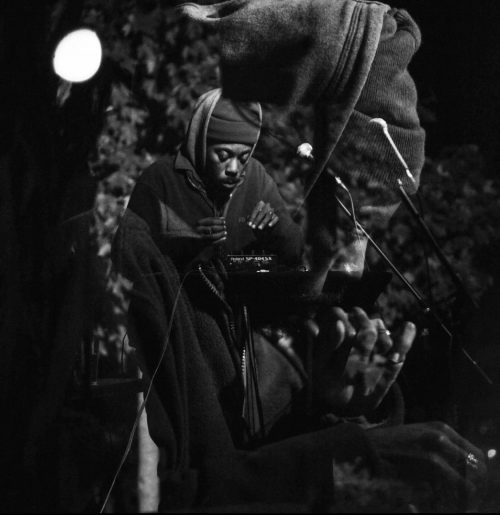
In Conversation With Ohbliv
The Richmond legend on burnout, collage art, chopped-and-screwed roots, and why he’s never believed the hype.
With a career that’s produced 40-plus releases and earned him comparisons to Madlib and Dilla, he’s stayed exactly what he’s always been: a student of the culture, more focused on the work than the noise surrounding it.
We caught up with him fresh off the release of Kurio, his latest full-length album. What follows is the conversation.
What’s next after Kurio
You recently dropped Kurio, an incredible album. What are you up to these days creatively? Anything new taking shape?
“I’m doing what I usually do as a student of culture. A lot of listening, reading and out of the studying and researching and living, art is created.”
Burnout and visual art
Your catalog is massive, 40-plus releases deep. Do you ever get burned out from making music and have to step away, or does it not work like that for you?
“Oh, of course when working at a high capacity, burnout is inevitable. That’s why side quests, different mediums of creative release are important. In addition to music, I am a visual artist. The Kurio album cover is my collage art, and I’ve been making the majority of my album covers the whole time. I started delving more into visual art while on a beat break.”


The physicality of a session
You’ve talked about being physical when you work, standing, jumping around, wilding out during sessions. What was the session like for “Stanks for Every Thing” on Kurio?
“I’m simply a vessel for ideas and energy. A lot of my sessions I don’t even remember. There’s plenty of beats I go back and listen to with no clue how I made it.”
The Praise
Fly Anakin called you the most influential producer of his day. Do statements and comparisons like that put any pressure on you, or do you take them a different way?
“I don’t even think about it that way. I started because I wanted to make music I wanted to hear, and it’s still that way so I’m pretty detached from praise or criticism. I hear it, but I also grew up knowing: don’t believe the hype.”
On Richmond
You’ve said Richmond sleeps on its own artists, but you get booked coast to coast. Has that push-pull changed how you feel about home over the years?
“I’ve come to terms with the nature of the area. The interest ebbs and flows, but from being able to travel and experience different cities, etc… I’ve learned that Richmond is not an anomaly.”
Dark Twaine
Dark Twaine is more spiritual and less structured, and it grew out of chopped-and-screwed before “vaporwave” was even a word. What does Dark Twaine let you express that Ohbliv doesn’t?
“Dark Twaine represents the primal, genreless form of my inner voice and vision for music. It started as an alias for a vaporwave project I dropped called The Passion and The Power for the Fortune 500 label. But it turned into a project where I could explore my other influences outside of hip-hop. Noise, found sounds, ambient and organic textures began to become a focal point as a way to express more existential ideas I have about life, art, culture, and psychology.”
The pause-tape era
Like a lot of the greats, you came up in the pause-tape era. Do you feel like learning to make beats that way gave you an edge, an ear that producers who started with modern tools might not have?
“I wouldn’t call it an edge, but it’s a skill set that helped tune my ear, for sure.”
Where to start
For anyone just discovering you today, what should they hear first?
“To anyone discovering my music today: you should start with SLPHNC III, then go back and start from Ez Widas and listen in order.”
Straight from Ohbliv himself: begin with SLPHNC III, then go back to Ez Widas and work forward through the catalog in order. And of course — stream Kurio, the album that brought us here in the first place.